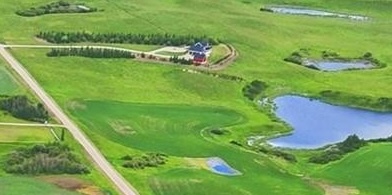
For many Canadians, owning an acreage represents the perfect balance between rural living and modern convenience. Whether it is a hobby farm, an equestrian property, a country estate, or a private rural retreat, acreage ownership offers space, privacy, and lifestyle benefits that are difficult to find in urban environments. However, financing an acreage can be more complex than obtaining a mortgage for a typical city home.
Lenders view acreage properties differently because they often involve larger land parcels, additional buildings, unique servicing systems, and varying marketability. As a result, borrowers should understand the financing requirements before beginning their property search.
One of the first factors lenders consider is the size of the property. In many cases, properties with up to 15 acres can qualify under standard residential mortgage guidelines, provided the land is primarily residential in nature and does not generate significant agricultural income. Properties exceeding 15 acres may require additional review, and some lenders may limit financing depending on the location, use, and marketability of the property.
The property’s intended use is another important consideration. Lenders prefer acreages that are primarily owner-occupied residences. If the property includes active farming operations, commercial activities, boarding facilities, or substantial agricultural income, specialized financing may be required. Each lender has different policies regarding hobby farms, equestrian facilities, and mixed-use properties.
Servicing is also a key component of acreage financing. Unlike urban homes connected to municipal water and sewer systems, rural properties often rely on private wells and septic systems. Lenders will typically require confirmation that these systems are functioning properly and meet local health and environmental standards. In some situations, additional inspections may be requested before final approval.
Down payment requirements for acreage properties are generally similar to traditional residential mortgages. Qualified borrowers may be able to purchase with as little as 5-10% down, depending on the property characteristics and lender guidelines. However, larger acreages, properties with agricultural components, higher valued properties, or those considered less marketable may require a higher down payment.
Because acreage properties are unique, appraisals play a particularly important role in the approval process. Rural appraisers must evaluate not only the home itself but also the land, outbuildings, location, and comparable sales within the surrounding area. In some rural markets, finding comparable properties can be challenging, which may extend the approval timeline.
Qualifying for an acreage mortgage is generally similar to qualifying for a traditional residential mortgage. Lenders will review your income, employment stability, credit history, existing debts, and down payment to determine affordability. Standard debt service ratio guidelines typically apply, although some lenders may conduct additional due diligence on the property itself due to its rural nature.
One of the greatest advantages of working with a mortgage broker when purchasing an acreage, is access to a wide range of lenders. While some financial institutions have restrictive rural property policies, others actively specialize in acreage, hobby farm, and country residential financing. A mortgage broker experienced with these properties can identify the lenders most likely to approve the property and secure competitive rates and terms.
Whether you are purchasing a small country property, a luxury rural estate, or a recreational retreat, proper financing guidance can make the process significantly smoother. Acreage mortgages require specialized knowledge, lender relationships, and an understanding of rural real estate markets.
——————————————
Mortgaging an Acreage Continued ….
Whether you’re looking for more privacy, room for horses, a hobby farm, or simply a quieter lifestyle, rural properties offer opportunities that city homes simply cannot.
An important step in your preparation, is understanding that not all lenders finance acreages the same way. While most banks and mortgage lenders will finance rural properties, each has its own lending guidelines regarding acreage size, zoning, outbuildings, and property use. Some lenders are comfortable financing properties with several acres, while others have acreage limits or restrictions. If you’re purchasing an acreage with barns, workshops, guest houses, or other outbuildings, these features should be discussed early in the financing process. Some lenders readily accept these improvements, while others have limitations. Working with an experienced mortgage broker is one of the best ways to simplify the process.
| Lender Type | Typical Max LTV* | Typical Acreage Comfort Zone | Notes |
| Insured lenders using CMHC, Sagen or Canada Guaranty | Up to 95% LTV (subject to conditions) | Often house plus residential-use land, commonly 5 to 10 acres, more on exception |
Property must be residential, year-round accessible, and suitable for full-time occupancy. Insured purchases must generally be under $1.5M.
|
| Major banks / Monoline lenders | Up to 80% LTV conventional, or insured if approved | Commonly 5 to 15 acres maximum, more on exception |
Stronger files may receive exceptions. Policy will usually focus on the house, garage, and allowable residential portion of the land.
|
| Credit unions | Up to 80% LTV conventional, or insured if approved | Commonly 10 to 40 acres, sometimes larger |
Usually more flexible with local rural properties, especially where they understand the market.
|
| Alternative / B lenders | Usually 65% to 75% LTV | Case-by-case |
Used when income, credit, zoning, condition, or property uniqueness does not fit prime lending.
|
| Private lenders | Often 50% to 65% LTV | Case-by-case |
More expensive, short-term solution. Property equity and exit strategy are critical.
|
| Agricultural / farm lenders | Varies, often 50% to 75% LTV | Larger acreages, farms, agricultural use |
Better suited when the property is income-producing, farm-zoned, or beyond residential acreage guidelines.
|
* LTV = Loan to Value
Acreage specific conditions, these are where rural properties differ.
Water Supply:
- Water potability test
- Well flow test showing adequate production (some lenders)
Septic System:
- Septic inspection
- Confirmation system complies with local regulations
- Confirmation system is functioning properly
Where the property has agricultural zoning, lenders may require confirmation that:
- The property is primarily residential
- No commercial farming operation exists and/or farm income is incidental
- Equipment is excluded from value
If you’re considering purchasing an acreage, obtaining a mortgage pre-qualification before you begin shopping is one of the smartest decisions you can make. A pre-qualification helps establish your budget, strengthens your negotiating position, and gives you confidence when you find the perfect property.
Whether you’re buying your first country home or upgrading to your forever acreage, expert advice can make the entire financing process smoother and help turn your rural dream into reality.